
Because most organizations want to streamline the content management process, erasing the concern of managing redundant content is mission-critical. However, with large document collections finding duplicative content or nearly duplicative content is extremely challenging. Harmonizer, by Data Conversion Laboratory, is a software application that analyzes document collections using natural language processing to identify redundant content. Harmonizer simultaneously analyzes across any file format – XML, HTML, SGML, Word, Framemaker, InDesign, PDF, and others – and is invaluable when planning a content reuse strategy or moving content to a new platform.
Take part in this webinar to
Presented by Christopher Hill
Christopher Hill is the Technical Product Manager for Harmonizer at Data Conversion Laboratory. Chris is an experienced IT professional who started programming in the 1980s. Since the early 2000s, Chris’ experience includes work as a support engineer, product manager, and user interface designer, helping organizations transition data and content to modern digital formats and platforms.
Laura Bellamy, Director of Content Insights and Quality
[email protected]
Laura has 20+ years of experience in the content and customer experience industry where she brings a forward-thinking mindset to help teams adapt and grow. She has been recognized for award-winning user-centered experiences and innovations. Formerly at AWS, she led the Content Insights & Quality to establish evidence-based standards for content quality and performance. Prior to Amazon, she led Content Strategy and Information Experience for VMware and served as an information architect for IBM. She is a co-author of the book DITA Best Practices: A Roadmap for Writing, Editing, and Architecting in DITA.
Large Language Models (LLMs) are a hot topic, discussed from many different angles. There is a lot of excitement about what they can do, but also a lot of concern about how they do it.
It's one thing to let generative AI write a poem or the description of a talk (not the case here), but can we trust it to give us the right answers to critical questions or make the right decisions? The clear disadvantages of this approach are the lack of explainability of the results, consistency, and accuracy of responses, the need for large amounts of high-quality data, and the potential for bias in the content generated by the models. One possible answer to these challenges is to combine these generative technologies with knowledge graphs that can help explain the results and support the generation of high-quality data to train the models. The combination of generative AI and symbolic AI can ultimately lead to eXplainable AI (XAI), which can help us in our daily work.
We will show the benefits of combining both technologies, how knowledge graphs and intelligent structured source content can help to create better and more explainable results with generative technologies, and how generative technologies can help to create better knowledge graphs. This combination will lead to the creation of intelligent content that enables deeper understanding and informed decision making.
Etteplan and Semantic Web Company have developed unparalleled experiences and capabilities in creating, developing, and maintaining consistent (technical) knowledge bases for many companies across multiple industries and markets - placing them in a unique position to leverage the true potential of Large Language Models.
Presented by:
Helmut Nagy, Semantic Web
Helmut is Chief Operating Officer of the Semantic Web Company (SWC). In his role as COO he designs and implements customer-centric processes and plans the strategic development of the PoolParty Semantic Suite together with the involved teams based on the SWC business strategy.
Eric Tengstrand, Etteplan
With over 10 years of experience in leading and developing service solutions for different customers within the manufacturing industry, Eric is currently the Vice President Global Service Solutions in Technical Communication Solutions at Etteplan.
Etteplan is a rapidly growing Technology Service company specializing in software and embedded solutions, engineering solutions, and technical communication solutions. We are a forerunner in the engineering industry and we differentiate ourselves by the wide-ranging competence of our experts. Our customers include the world’s leading companies in the manufacturing industry. We help them to create a better world through engineering, innovation, and digitalization. The company currently has over 4,000 professionals globally of which 850 are in Technical Communication Solutions.
Eric’s mission is to help Etteplan’s customers improve their operational performance and achieve their business goals through innovative and cost-effective managed services.
Eric is responsible for the strategic direction, offering development and solutions sales leading a team of professionals across 4 countries.
Does this sound familiar: Someone requests to integrate a new system managing some sort of content into the documentation and/or localization process.
We will share some user stories about automating this interface. And ask ourselves the question: Why do we keep re-inventing the wheel? Why is there no standard? And we will present some initiatives that the industry has seen to build exactly this. The latest one is the TAPICC initiative by GALA, which we will present in more detail. We will also take a closer look at the COTI standard.
Join us for use cases containing answers to the following questions:
Klaus Fleischmann studied translation and IT in Vienna, holds an MA in Conference Interpreting from Monterey, California, and a MAS in Technical Communication from Krems, Austria. In 1996, he founded Austria-based Kaleidoscope, a company implementing content, translation, and terminology management processes for internationally active companies. Kaleidoscope develops online collaboration software for enterprise-level terminology workflow, translator query management, in-country review etc., making the translation quality process comprehensible and strategically manageable. In 2007, he became CEO of Austria´s leading LSP, Eurocom Translation Services. Always active in the industry, Klaus got voted into the Gala Board of Directors in 2015 and 2017.
In this webinar, Dipo Ajose-Coker offers a step-by-step guide to understanding and implementing structured authoring and DITA, highlighting the benefits such as improved content reuse, consistency, and efficient multichannel publishing.
Structured authoring and DITA represent a strategic shift towards more efficient and effective content management. The session begins with an introduction to structured authoring and DITA, focusing on the benefits of this methodology, including enhanced content reuse, improved consistency across documentation, and streamlined localization processes.
Attendees will gain insights into the best practices for implementing structured authoring and DITA within their organizations, including tool selection, team training, and workflow design. The session also offers practical strategies for overcoming common challenges associated with implementing structured authoring and DITA.
In summary, participants will leave the session equipped with valuable insights and practical strategies to implement structured authoring and DITA for achieving greater content agility and operational efficiency:
Can regulated industries afford to miss the GenAI wave because of its potential risks? Regardless of the use case – from employee productivity to user information – the technology will need to be closely controlled and monitored. Tracing and auditing user interactions as well as LLM replies and measuring any drift in quality and reliability are absolute necessities. In this session, we will examine the risks of GenAI in Content Delivery, from security and compliance to misinformation and liability, and will discuss what it takes to mitigate them and safely integrate GenAI into highly regulated sectors.
Presented by Fabrice Lacroix
Do you know:
Stefan Gentz is the Senior Worldwide Evangelist for Technical Communication at Adobe, headquartered in San Jose, California, USA. Stefan’s mission is to inspire enterprises and technical writers around the world and show how to create compelling technical communication content with the Adobe Technical Communication tools. He is also a certified Quality Management Professional (TÜV), ISO 9001 / EN 15038 auditor, ISO 31000 Risk Management expert, and Six Sigma Champion.
As a sought-after keynote speaker and moderator at conferences around the world, he travels around the globe half of the year. Besides that, he has been the European Ambassador for the Globalization and Localization Association (GALA) for many years, a member of the tekom Conference Advisory Board for several years, and a founding member of the tekom iiRDS working group for Intelligent Information and member of the OASIS DITA Adoption Committee. In 2016, Stefan Gentz was awarded by MindTouch as one of the Top 25 Leading Content Strategist Influencers in the world and as one of the Top 25 Content Experience Influencers in the world in 2017. Stefan is also the mastermind behind Adobe DITAWORLD, the world’s biggest DITA Online Conference for Marketing and Technical Communication Professionals.
Stefan Gentz on LinkedIn
https://www.adobe.com/products/one-adobe-solution-for-technical-content.html
Saibal Bhattacharjee has been with Adobe for more than 12 years now and is currently working as Director of Product Marketing & Business Strategy in the Digital Advertising, Learning & Publishing business unit.
Saibal is in charge of GTM and Business Strategy for a $140MN+ product portfolio in Adobe – ranging from market-leading cloud-native component content management system (CCMS), advertising & subscription monetization products for connected multiscreen TV platforms, content authoring, and publishing desktop apps, to print & scan solutions that power Office and Commercial printers, etc.
Saibal drives the products’ positioning and messaging, brand strategy and communications, marketing campaigns and demand generation (growth and retention), partner ecosystem and new market development, customer education, business insights, market research, and analyst relations, sales enablement, and field marketing efforts.
LinkedIn: https://www.linkedin.com/in/saibalbhattacharjee1979/
Twitter: https://twitter.com/saibalb79
.
Stilo showcases a comprehensive, end-to-end process for converting pharmaceutical documentation, beginning with the source DOCX Word file. This journey encompasses the creation of automation rules, execution of the conversion, meticulous quality assurance, and, ultimately, the seamless publication of the final output through Oxygen. Explore how Stilo's Migrate effortlessly addresses prevalent conversion challenges, including the precise identification and generation of product name keys, resolution of table alignment discrepancies, and an array of other crucial tasks. Dive deep into the intricacies of transforming your industry-specific content from its initial state, ensuring a flawless and efficient transition.
Presented by: TJ Dhaliwal, Stilo
TJ Dhaliwal is a Technical Sales Product Specialist at Stilo, helping customers uncover solutions to their content conversion needs. With a solid technical background in engineering and a passion for public speaking, he’s successfully bridged the gaps between project stakeholders. As a problem solver, TJ has helped several enterprise-level companies convert tens of thousands of pages of their content to DITA.
The results have been collected, analyzed, and discussed. Now it’s time to share the results and our observations with you. Join Dawn Stevens as she shares the results of the 2022 CIDM Benchmark Survey on translation and localization practices in our community. She’ll examine the trends and answer questions such as:
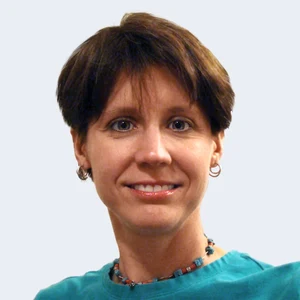
Dawn Stevens, President, Comtech Services and Director of CIDM has 28 years of practical experience in virtually every role within a documentation and training department, including project management, instructional design, writing, editing, and multimedia programming. Dawn is the perfect advisor to identify and remove the challenges you face in producing usable, technical information and training content. With both engineering and technical communication degrees, Dawn combines her solid technical foundation with strong writing and design skills to lead our team of consultants and specialists in providing the expertise you need.
In this webinar, we'll discuss the benefits of using Stilo Migrate for automated content conversion. With Stilo Migrate, you can save time and resources by eliminating manual content conversion. We will discuss how an automated conversion is superior to a manual conversion in avoiding headaches such as incorrect styling and automatic table conversions. Join us to learn how Stilo Migrate can streamline your content conversion process and save you valuable time and resources.
Presented by Jacob Brennan
Jacob Brennan is a Technical Sales Product Specialist at Stilo. He works with Stilo Migrate customers and aids in converting their legacy content to DITA. Jacob is a recent graduate from the University of Ottawa holding a BASc. in Mechanical Engineering and a BSc. in Computing Technology.